KEY TAKEAWAYS: CanMNT make long-awaited World Cup history in 6-0 thumping of Qatar


The CanMNT have ARRIVED.
That’s the statement that they made at BC Place Vancouver on Thursday, as they thumped Qatar 6-0 in a dominant performance, vaulting to the top of Group B as they head into their last matchday of the group stage at this 2026 World Cup.
On a day when fans were hoping this Canadian side could get their first victory at a men’s World Cup, they didn’t just deliver on that promise, but did so with a performance that everyone will remember for years to come.
They played like a team that wasn’t satisfied with just getting a victory over the line - they played as if they wanted to show the world what they’re capable of.
It’s safe to say that they achieved that with this result.
Unfortunately, not all went to plan for Canada. Midfielder Ismaël Koné, who was supposed to have a breakout tournament for this team, left the game with a horrific leg injury that will end his World Cup prematurely. Given his importance to this team on and off the pitch, it’s a devastating injury, one that naturally shook up this Canadian side and its fans when it happened.
Moïse Bombito shares a photo with Ismaël Koné at the hospital 🥺#CanMNT pic.twitter.com/9fI7KRInlm
— OneSoccer (@onesoccer) June 19, 2026
But as they tried to pick themselves up after Koné’s injury, this Canadian team showed why many who watch them once end up rooting for them. They rallied as a team, despite the emotion of such a moment, and channelled their focus onto ending this game in the right way.
Now, they’ll look to continue to do that again as they get used to life without Koné for the rest of the tournament, as they aim to build off this special performance against Qatar. With the possibility of being able to win Group B firmly in their sights as they head into their final group stage game against Switzerland, there’s no reason why they can’t make that happen, especially if this performance is a sign of what’s to come from this team.
With that in mind, here are three KEY takeaways from this one.
Jonathan David and Cyle Larin step up at crucial time:
 After Cyle Larin did well to rise to the occasion for Canada in their tournament opener against Bosnia & Herzegovina, scoring a crucial equalizer to help rescue a point in a 1-1 draw, it was always going to be fascinating to see how he could build off that in this Qatar match.
Would Jesse Marsch reward him for that cameo with a start up front? Or would he keep him on the bench, using him as a game-changing supersub?
Marsch chose the former, which was a big call to make. While Larin certainly deserved the opportunity, him starting meant reigniting his partnership with Jonathan David, one that hasn’t been the most fruitful over the last few years.
With David’s ongoing slump, as he entered this game with just two goals in his last 10 games for Canada (both coming from the penalty spot), it seemed like a bold call to pair both back together in a game where Canada knew they needed to score a few goals, given how things had gone for them in their last few starts.
Yet, at a time when this Canadian team needed them the most, both strikers rose to the occasion with a throwback performance.
WHAT A VOLLEY!
— TSN (@TSN_Sports) June 18, 2026
Jonathan David FIRES home a volley to double Canada's lead!#FIFAWorldCup pic.twitter.com/YxPep1gM0L
They were lively, dangerous, and, when called upon, clinical, putting their fingerprints all over this result.
David, naturally, will steal the headlines with his showing. Anytime a striker scores a hat trick at the World Cup, that’s a huge storyline, as David joined a pretty exclusive club with that performance.
JONATHAN DAVID HAS ANOTHER!
— TSN (@TSN_Sports) June 18, 2026
Canada now leads 3-0 after David gets another!#FIFAWorldCup pic.twitter.com/YZbDSdBFeH
Plus, more importantly, it came on a day when he was a consistent threat for this Canadian team.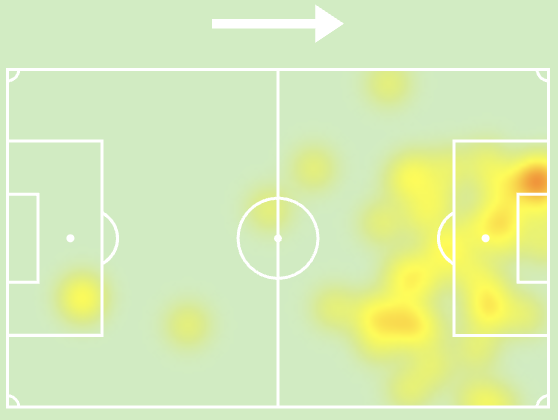
Here's David's heatmap from this game, showing that he got into the exact areas you'd want him to as a striker (SofaScore)
Not only did he score three goals, but he was a menace in the box, too, taking 15 of his 41 touches in that area, generating eight shots (worth 1.98 xG). For a striker in a slump, that’s all you could ask from him, as he created his own luck by making sure he was lively in dangerous areas.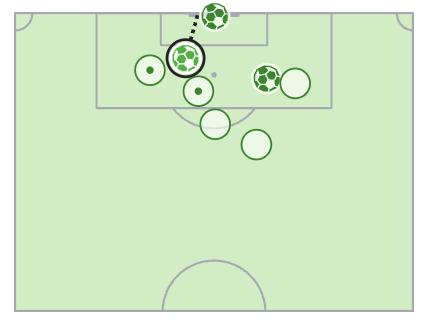
Here's David's shot map, further showing how dangerous he was in this game (SofaScore)
Larin, meanwhile, was no slouch. While his goal can easily be forgotten given the events of the game, it still stood as the match winner, and he also had a large part to play in Canada’s third goal of the day, where he was only denied a brace by an outstanding save from Qatar’s Mahmud Abunada (David then tapped home the subsequent rebound).
His numbers also paint a picture of his effectiveness, as he finished with six shots (worth 1.58 xG) and 11 touches in the box, as he also got to the sort of areas that you’d want a striker to get to. 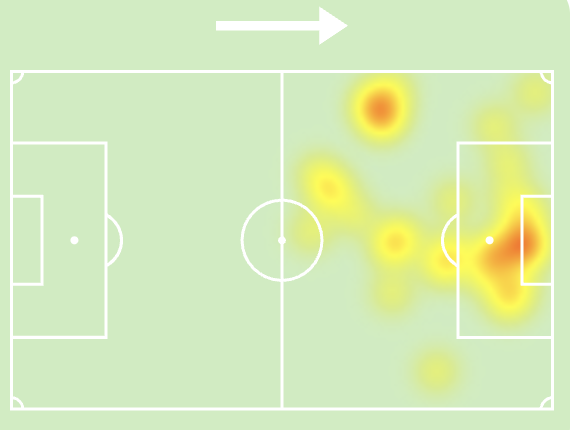
Here's Larin's heatmap, which showcases how he was simiarily effective with his ability to get himself involved in and around the box (SofaScore)
At the end of the day, that’s the story of David and Larin’s performances - they got to the areas strikers of their calibre are expected to get to, and they were rewarded for that.
CYLE LARIN OPENS THE SCORING!
— TSN (@TSN_Sports) June 18, 2026
Canada is off and running with a 1-0 lead from Larin once again!#FIFAWorldCup pic.twitter.com/K9GjC4Nu4x
Now, the big question is whether or not they can maintain this level of play against higher calibre opposition. While no one will discount Qatar’s quality as a team, especially given the stakes of this match, this is the sort of team that David and Larin typically haven’t had problems with (at least not until the last two years, that is).
To that point, the last time that Canada faced Qatar, coming in a friendly ahead of the 2022 World Cup? Canada won 2-0, with David and Larin each scoring inside the first 30 minutes of the game, just as they did in this match.
All of that to say, while this was a big step in the right direction for this duo, it’ll be imperative that they build on this with another strong showing against Switzerland.
Jonathan David has a hat-trick for Canada!#FIFAWorldCup pic.twitter.com/qIMx2jMSfR
— TSN (@TSN_Sports) June 18, 2026
After what they showed against Qatar, they’ve more than earned another opportunity to play together in that game, but they’ll need to maintain what worked in this one, and that’s to be threats in and around the box.
They do that, and this once seemingly finished partnership might’ve just found new longevity.
Canada’s full-backs flex their importance:
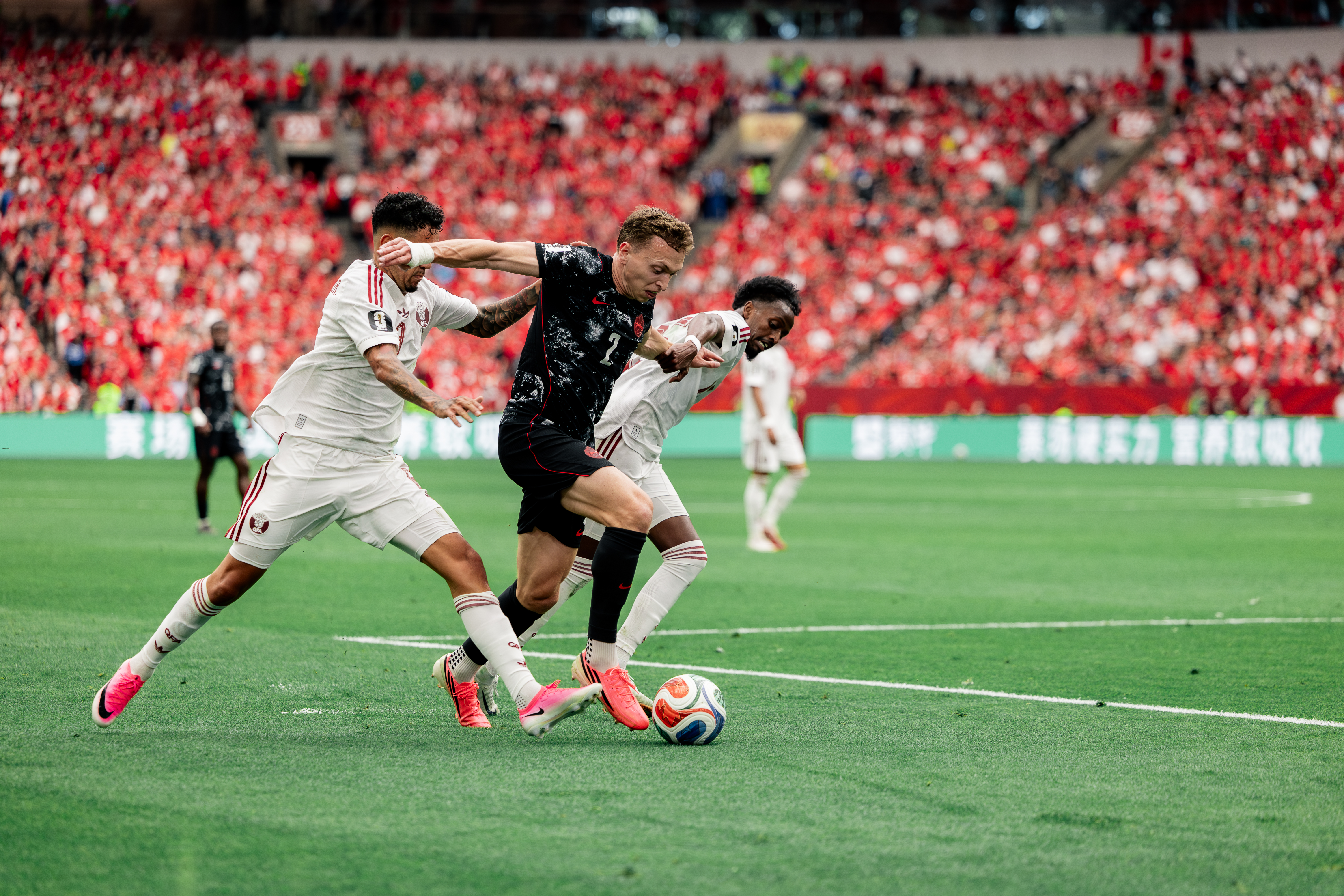 It’s funny that on a day when Jonathan David joined the elite club of players to have scored a hat trick at a World Cup, you could still make a convincing argument that two of Canada’s players weren’t actually David, but their pair of full-backs, Alistair Johnston and Richie Laryea.
Okay, maybe that argument wouldn’t go very far - David absolutely deserves to be named Player of the Match - but it still shouldn’t be discounted how important Johnston and Laryea were to Canada’s success in this game.
With how Qatar was defending off the ball, sitting back in a very compact 4-3-3, that put a lot of onus on Canada to create overloads in wide areas. That started with wingers Tajon Buchanan and Ali Ahmed, and that continued with full-backs Johnston and Laryea, who were tasked with supporting those wingers on the ball.
At first, it took a while for Canada to find joy in those wide areas. On the right, the combination play between Buchanan and Johnston was awkward, while on the left, Qatar did well to track Laryea’s runs beyond Ahmed.
But as the game progressed, both started to really come alive, and they never looked back once they got going.
Their attacking numbers paint a picture of their success on the day.
Firstly, there’s Laryea, who created three chances (worth 0.78 xA!), took eight touches in Qatar’s box, and then there was Johnston, who created six chances (worth 1.28 xA!), had 13 touches in Qatar’s box, and completed four out of 11 crosses.
Yet, those numbers are a testament to the way they constantly pushed forward when Canada was in possession.
Interestingly, though, while most would’ve expected them to profit from the space that Qatar left them by providing constant overlaps, where both really shone was with their ability to make dangerous underlaps.
That proved to be a good strategy, as that pushed Ahmed and Buchanan to play a bit wider when on the ball, which stretched Qatar’s backline out. From there, those underlapping runs would drag players out of position, either opening up dangerous crossing opportunities for Ahmed and Buchanan, or opening up crossing chances for Laryea and Johnston on the moments where they were either found with a through ball from a winger or on a pass from a midfielder (on those plays, their underlapping runs also operated as third-man runs).
For what it’s worth, that isn’t new to see from Laryea. It’s one of his best skills as a player, and he shows that all of the time for Canada and Toronto FC, especially when he’s paired with someone like Ahmed, who does such a good job of recognizing how to best utilize Laryea’s runs. 
Here's was Laryea's pass map from this game, with a lot of them coming from the left half space, showing his ability to make underlapping runs in that area of the pitch (SofaScore)
With Johnston, though, it’s something that Canada hasn’t always best utilized, which is why it was so exciting to see him shine offensively in this way. For those who watch him at Celtic, they’ll know that he’s developed into a lethal offensive weapon over the last few years, and a big reason for that is his ability to make dangerous runs, especially on the underlap (although he’s pretty darn good on the overlap, too). 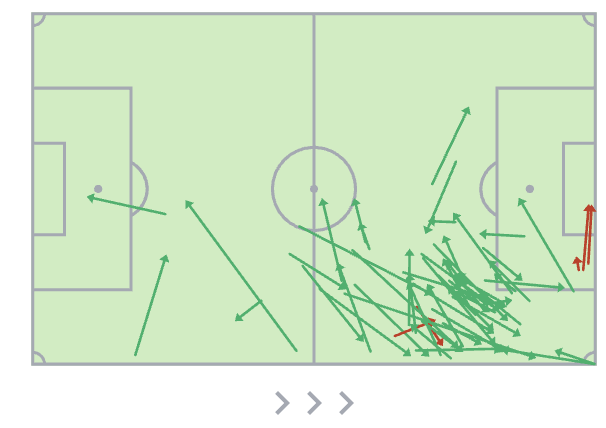
Similarily, here's Johnston's pass map, showing how he was able to attack that right half space with vigour for Canada (SofaScore)
On this Canadian team, though, Johnston is often deployed a bit more conservatively, usually dropping into Canada’s back three in possession. Part of that is due to his skill on the ball, yes, which makes him an asset deeper on the pitch, although it’s worth noting that another big reason for that deployment is due to Tajon Buchanan’s style of play as a winger, which is to drift wide and take players on 1v1 (Ahmed, by comparison, tends to drift centrally and combine a bit more with teammates in possession).
Perhaps, though, with what Johnston showed in this game, he’ll be pushed forward more going forward. Not only was he dangerous in this new role, but his runs also freed up Buchanan to play a bit more freely on the ball, something that he’s struggled to do for Canada in recent games.
Canada will have to tweak their possession set-up to make that work, as they’ll have to drop someone else into a back three, or just commit to building up in the aggressive back two they used against Qatar - for what it’s worth, Stephen Eustáquio is well suited to that sort of back three role, should they stick with that.
Here’s what that could look like - on paper, there’s a lot to like with this set-up, even if it seems a bit light in midfield. To that point, though, that’s where the ability of Laryea, Johnston, Ahmed and Jonathan David to be flexible and to drop into space helps - and, it can’t be forgotten that both full-backs won’t underlap at the same time, which allows one of them to stay back and support the midfield. 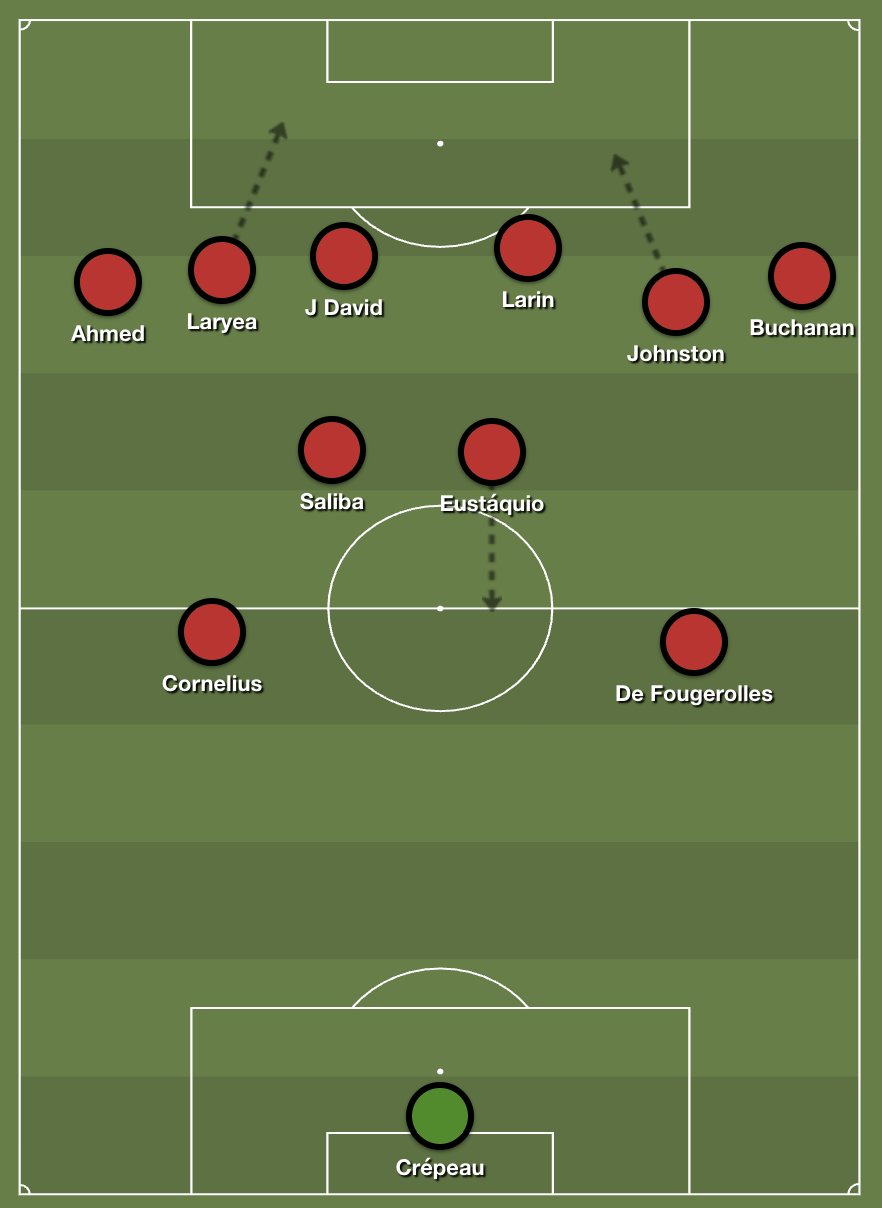
Here's a look at what Canada's possession formation could look like if they push Johnston and Laryea forward more aggressively as a pairing in possession (ShareMyTactics.com)
Of course, the big question now will be what happens with Laryea and Johnston when Alphonso Davies returns to full fitness, as he’d likely slot in at left back for one of them, but maybe the success of both will allow Marsch to ease Davies back into action.
Either way, it’s not a bad problem to have, even if it’d be extremely harsh for one of Laryea and Johnston to lose their spot to bring Davies back in, as they’d all of a sudden be pitted against each other to start at right back with Davies playing at left back. That’s decent depth, one might say.
Nathan Saliba is ready to fill in:
 While no one ever wants to see someone get injured, it’s an unfortunate part of the game. This Canadian team knows that well, as just in the last two years, they’ve dealt with serious injuries to players such as Tajon Buchanan, Alphonso Davies, Moïse Bombito and others.
Because of that, they’ll know that while it’ll be extremely difficult to deal with the loss of Koné, given his importance to this team, how they respond to this moment of adversity will be crucial.
To their credit, this Canadian team is ready to do that. Every time a key player has gone down, they’ve found a way to respond to that, and a big reason for that has been their ability to push players into bigger roles when called upon.
When Buchanan went down, Ali Ahmed stepped up and became a key piece on this Canadian team. When Davies went down, that opened the door for Richie Laryea to become an even more important player on this team. When Bombito went down, that opened the door for Luc De Fougerolles to become a key player.
Now, with Koné down, Canada will hope that a player can step up and similarly fill his shoes.
The good news? They’ve got someone ready to do that in Nathan Saliba.
It didn’t take long for Saliba to show that in this game, as he came on for Koné and scored a beautiful free kick (which he immediately dedicated to Koné), before adding an assist later in the game.
Nathan Saliba scores a free kick and honours Ismaël Koné following the injury.#FIFAWorldCup pic.twitter.com/OebZlk2Cxm
— TSN (@TSN_Sports) June 18, 2026
With that, Saliba showed why many have suggested he could be a breakout player at this tournament. Every time he’s been called upon for Canada, the 22-year-old has looked ready for the occasion, and that was no different in this game.
It didn’t matter that he was making his World Cup debut or that he was coming on in less-than-ideal circumstances after the injury to a teammate - he put all of the noise behind him and did what he did best, which is to control the tempo in midfield. 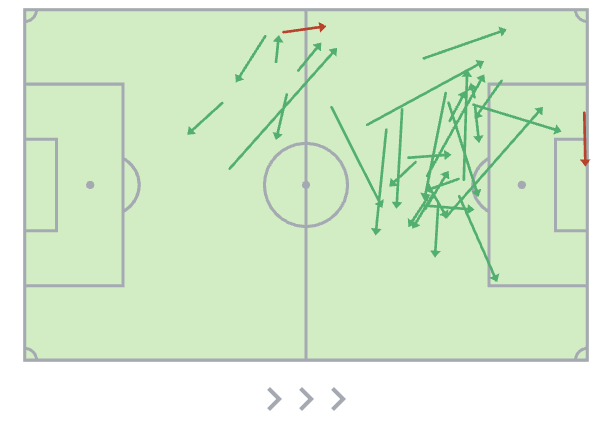
Here's Saliba's pass map, showing that he hardly set a foot wrong once he got onto the pitch (SofaScore)
Yes, this cameo came exclusively while Qatar was down two players, which must be noted, but that still won’t take away from the way he shone in this limited cameo.
Because of that, it feels like Saliba is in a good position to seize this opportunity ahead of him. After a breakout year for Belgium, his game is more polished and complete than ever, but he’s still got that X-Factor, as he showed on his goal.
And that’s key, because Koné also has that ability to break open games, which is the biggest area where his absence will be felt. There’s no one better on this Canadian team at getting on the ball and controlling the tempo of games the way he does, but Saliba isn’t far behind him in that regard.
Therefore, while it might take a bit of an adjustment period as Saliba likely assumes a starting role in Koné’s absence, there is no reason why he can’t step up and make sure that Canada’s midfield doesn’t completely drop off without Koné. It’s a tall task, yes, but it’s one he is absolutely ready for, even though there might be some immediate growing pains.
Plus, it certainly can’t help that Saliba loves playing in Vancouver - two of the three goals he’s scored for Canada have now come at BC Place.
It bodes well for him that Canada’s next game will be in the city, and that they could potentially have two more games there on top of that if all goes well for this Canadian team over the next few weeks.