AGR: What’s next for CanMNT as they set sights to 2030 World Cup cycle?


Just because the CanMNT’s 2026 World Cup adventure is over doesn’t mean that the hard work is now finished for Jesse Marsch’s side.
In fact, such is the nature of the modern international game that Marsch and his coaching staff won’t have much time to rest and celebrate their run to the Round of 16 at this tournament at all, as they’ll have to immediately turn their focus to what’s next for this Canadian team.
Already, in September, there’s an international window, as Canada will be able to play up to four games thanks to FIFA’s decision to combine the September and October windows into a giant one. There, it’s expected that Canada should be able to book some friendlies to help build on the momentum from this World Cup, and to kick off this next cycle on the right foot.
Then, in November, Canada will begin their journey in the 2026-2027 Concacaf Nations League. There, they will get their next big shot at a trophy, as they’ll enter the quarter-finals of that tournament - thanks to their ranking as a top-four side in Concacaf, they’ll once again get to skip the four-game group stage that all of the other League A teams will play during that September/October window, earning a bye straight to the quarter-final for a third straight edition (they also earned that privilege in 2023-2024 and 2024-2025).
Continuing from there, Canada will hopefully be able to make it to the final four of the Nations League next March, where they can snap their 27-year trophy drought (dating back to 2000) - otherwise, they’ll also get a chance to snap that drought during the 2027 Gold Cup, which will be held next summer.
This incredible World Cup journey may be over for the CanMNT 🇨🇦, but as far as 2026 goes?
— OneSoccer (@onesoccer) July 6, 2026
We're only at half-time 😎
Here's the next time you can watch Canada play this year, and beyond 👀 pic.twitter.com/2MMgz9ygvV
Otherwise, Canada will also begin their journey to the 2030 World Cup next year, as they’ll enter Concacaf World Cup qualifying in November, where they’ll start in the second round. Those second-round games will be played throughout the end of 2027 and 2028, before the final round of World Cup qualifiers will begin in June of 2028 and end in the fall of 2029.
At the same time, there will be another Nations League cycle smashed right in between that final round of World Cup qualifying, as well as another Gold Cup in 2029 - and there is still the possibility that Concacaf teams end up back at the 2028 Copa América, after having participated in the 2024 edition.
Safe to say that there will be no shortage of opportunities for this Canadian team to gather over the next few years, where they’ll have plenty to accomplish. If all goes well, they’ll hope to win a trophy (or a few trophies), qualify comfortably for the next World Cup, and make another deep run at Copa América if invited again.
Yet, despite having a lot of clear short-term goals, Canada must also balance their pursuit of those objectives while keeping an eye on the bigger target that’s on their minds - making another big run at the 2030 World Cup, where they’d love to reach the Round of 16 again (or perhaps go even further).
That’s worth noting, because teams can often lose sight of their bigger goals when getting caught up in the increasingly demanding nature of modern international soccer, where short-term results can quickly start to take priority over long-term growth. 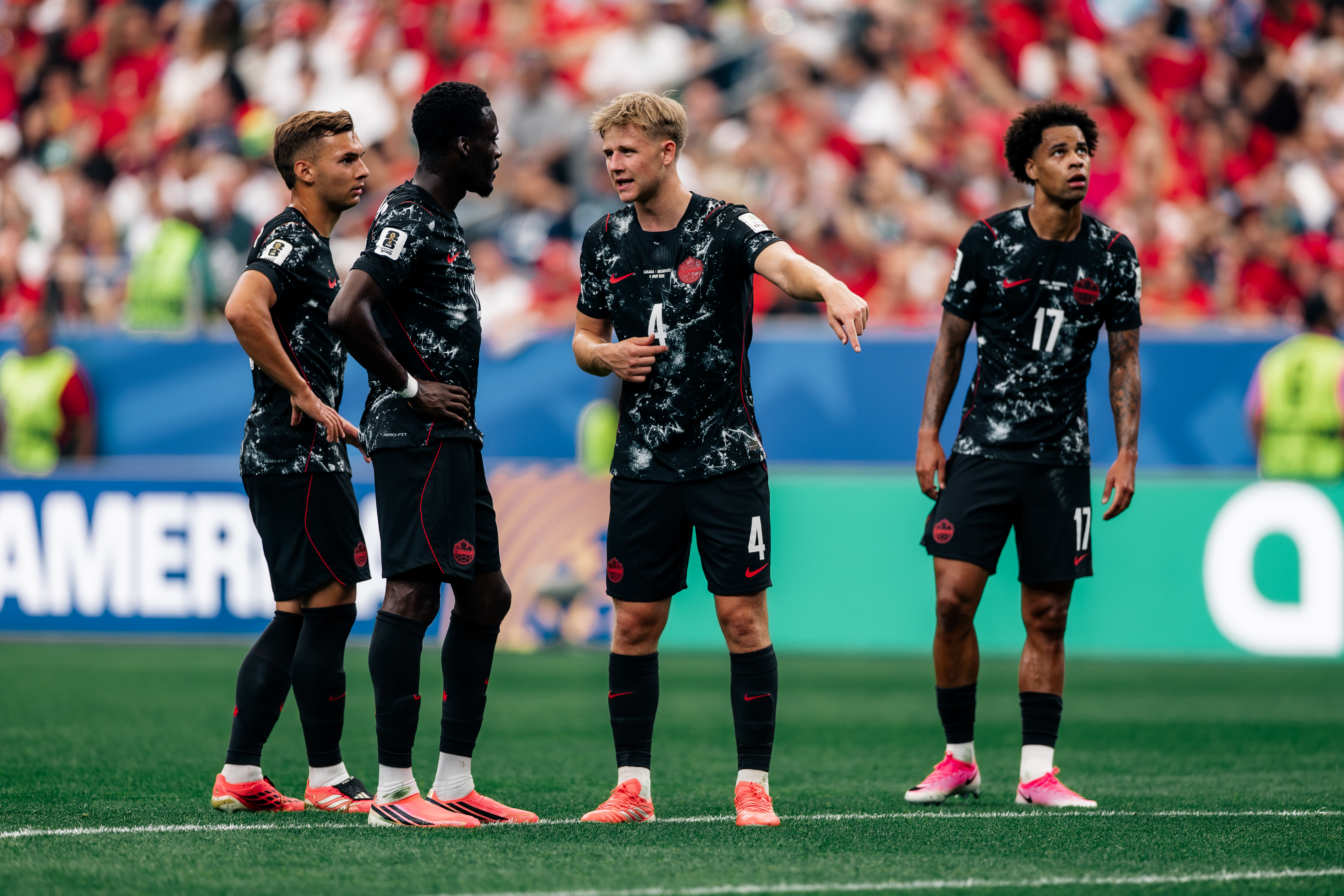
What challenges does Canada face in achieving long-term objectives?
What that means is that as Canada now gets set for what awaits them at the start of this next cycle, they can’t lose sight of that bigger goal, which will require some careful future planning to achieve.
For example, Canada will need to find a way to integrate some new players into their team over the next few years, as they transition this side into a new generation. That’s not to say that they’ll need to get rid of every player over a certain age, but they’ll have to instead reward younger players who are knocking on the door and are deserving of opportunities.
Plus, more specifically, Canada will need to make sure that they actually allow the opportunity for these players to step in, taking advantage of certain moments in the calendar to do so.
In this last cycle, they did a great job of integrating some new faces into their team, helping them transition from their 2022 World Cup team. When looking at this squad, Moïse Bombito, Luc De Fougerolles, Niko Sigur, Nathan Saliba, Promise David, Tani Oluwaseyi, Ali Ahmed, Marcelo Flores and Owen Goodman are some of the names that prove that Canada was able to bring in some new faces to help complement the core group of players who remained from the 2022 World Cup.
At the same time, it’s worth noting that Canada’s quest to make their squad younger was aided by two key factors, which they won’t be able to replicate in this cycle.
Firstly, there was the arrival of Marsch as head coach in 2024, as any new coach is going to come in and have a different handle on a group than their predecessor did. So naturally, when Marsch replaced John Herdman, there was room for some new players to step up, with Marsch having a different perspective on the player pool than Herdman did.
With Marsch now signed to a contract through the 2030 World Cup, he’s expected to remain in charge for this cycle, which is good news for this team given the way Marsch has already pushed this team to new heights since arriving, but it just means that there won’t be that opportunity for some players to be seen differently by a new coach. That’s worth noting for veteran players, who might have a bit of a longer leash under a coach that trusts them compared to if a new face were to come in.
Then, secondly, it’s worth mentioning all of the injuries that Canada dealt with over the last year and a half, which forced them to push some newer players to step into bigger roles earlier than they perhaps typically might’ve otherwise.
One can wonder if Canada would’ve afforded some of their younger players the same opportunities had they had a fully healthy squad at their disposal, as their focus would’ve been on ensuring that they were as ready as possible to perform at their top level at a home World Cup this summer.
Ideally, Canada will be able to rely on not having such a bad injury record next cycle, although that’s out of their control - all of that to say that it was still a factor worth highlighting as a reason why they integrated so many new players into their squad in the 2026 World Cup cycle.
On the flip side, when looking ahead now at this upcoming 2030 cycle, there are other new factors that Canada will have to deal with, for better or for worse.
From a more positive standpoint, Canada won’t have the pressure of heading into a home World Cup, which will allow them to take a bit more of a bigger-picture approach when it comes to planning for what’s ahead.
Yet, given the way that they’ve grown over the last few years, there’s also real pressure on them to go out and win some trophies and show that while they’ve now cemented themselves as a top-three team in Concacaf, they aren’t just there to sit as the third wheel in the ongoing Mexico-USA battle for supremacy at the top of the region. On paper, Canada has shown to be every bit capable of competing with both of those teams, and winning a trophy would help prove that.
Has the hierarchy of power started to shift in Concacaf? 📊
— OneSoccer (@onesoccer) July 8, 2026
The #CanMNT, #USMNT and Mexico were all eliminated in the Round of 16, but some eliminations were more noble than others 👀 pic.twitter.com/8v4yiAZEOd
Because of that, Canada’s going to have to strike a balance between those two realities when thinking about future planning.
When looking at the schedule, Canada’s big short-term focus will likely be on winning the Nations League - over the past few years, that has arguably become the top competition in Concacaf, with its scheduling allowing for teams to bring stronger squads. By comparison, due to the frequency and timing of the Gold Cup, top teams are more likely to bring B-squads to that tournament to try and experiment, while also allowing top players a chance to rest.
Considering that, could it not make sense for Canada to use the 2027 Gold Cup as an opportunity to take a look at some younger players, given that they’ll be sending their strongest team to the Nations League?
Otherwise, it’s worth noting that the first round of World Cup qualifying will be quite straightforward for Canada, who should have no problem making it out of their group as one of the top two teams, given that they won’t be drawn with the likes of Mexico, US, Panama, Costa Rica and Honduras, and will only be drawn with one of Jamaica, Curaçao, Haiti, Guatemala, El Salvador, and Trinidad & Tobago (based on the current FIFA Rankings).
And even if they do struggle, for whatever reason, with the chance to play each team in their group twice, the margin for error will be quite high for them, so there should still be plenty of opportunity to integrate newer players into those games - and, as a bonus, since they’re competitive matches, those will also be a great opportunity to cap-tie some players, too.
Plus, it’s not as if the suggestion is just to throw out 23 inexperienced players in World Cup qualifiers and to call it a day - Canada will still ideally call in their top players for those games, but they hopefully won’t rely on them to play 90 minutes every game of every game, especially early on.
Of course, as Canada gets further into World Cup qualifying, then they’ll take fewer risks and play more of their best players - and hopefully by then, the work they’ve done will have helped them identity a few newer players who are ready to make that next step and be considered among their top group, whether that’s youngsters already involved in the team such as Sigur, Saliba and the others, or new players we’re not even talking about. 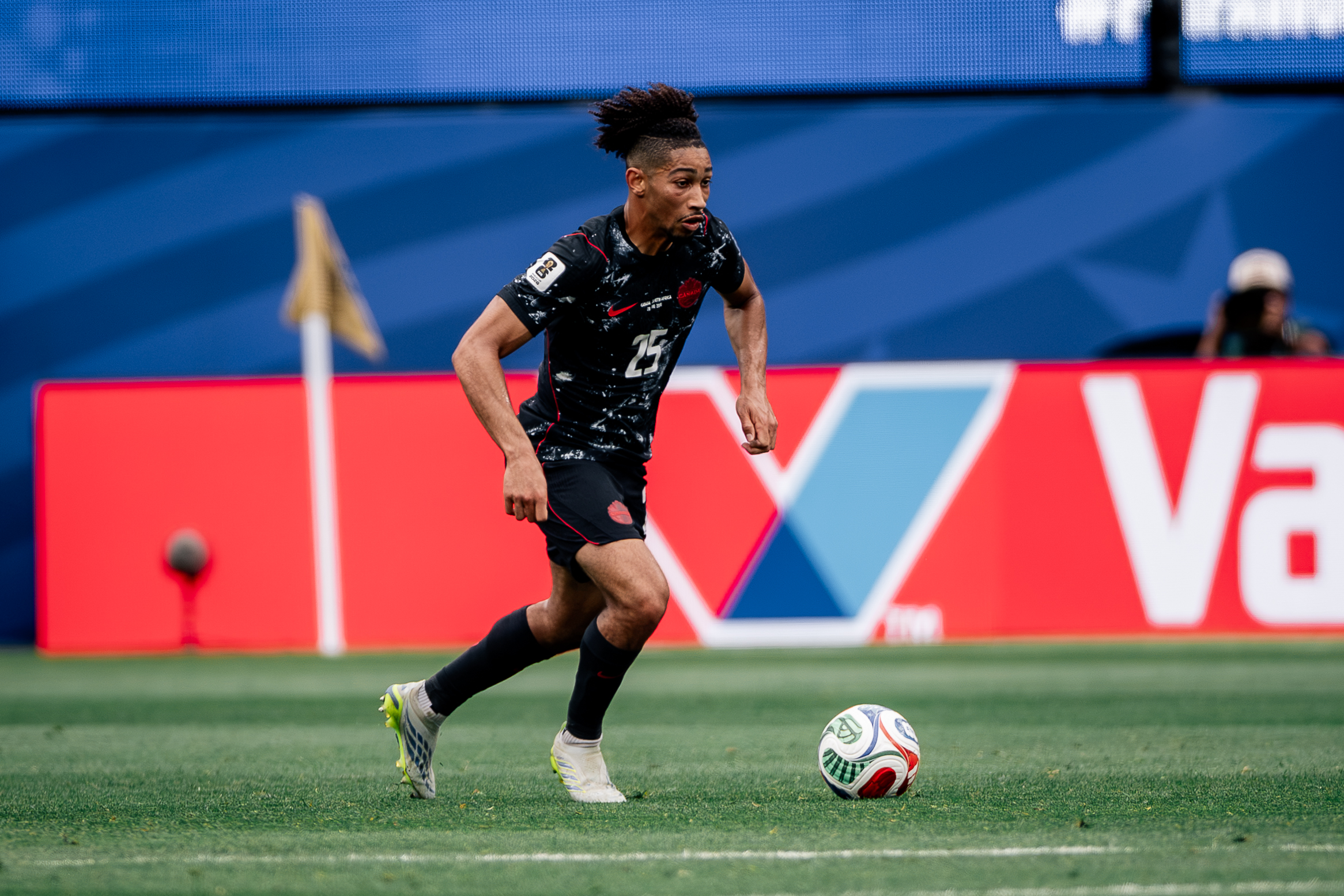
Could youth development also play a role?
Elsewhere, something to watch out for? If Canada can also take some big strides at the youth level, which could help them massively in this quest.
Jesse Marsch has quickly shifted his focus to the Concacaf U20 championship, where he will help Canada's mission to qualify for the U23 tournament at the LA 2028 Olympics.
— Ben Steiner (@BenSteiner00) July 6, 2026
Canada Soccer CEO Kevin Blue says Marsch is already making calls to get players released for the U20s.
Just this summer, Canada has the chance to qualify for the U20 men’s World Cup for the first time since 2007, and for the Olympics for the first time since 1984 - it would be huge to be able to at least make it to the former, if not both competitions, as those tournaments would offer some excellent developmental opportunities for young Canadian players to showcase their talents. And, as a bonus, it could prove to be a good recruitment tool for Canada - offering players the opportunity to play at a U20 World Cup could help convince some promising young dual nationals to come into the fold, especially if they see that there’s a potential pipeline for them to take from the U20 team to the senior team.
Marsch clearly sees that, which is why it looks like he’s getting involved in helping that U20 team for their qualifiers (which serve as qualifiers for both the U20 World Cup and the Olympics, for those unfamiliar with the process), so hopefully that commitment can pay off in a big way. 
What does a transition period look like for Canada's 2026 World Cup squad?
To return to this current squad, however, that’s another big question worth asking - what does a transition period look like for this Canadian team?
That’s going to be a fascinating question to answer, as the reality is that it’s never straightforward to usher a team into a new era. The reality is that no one knows how players are going to develop over the next few years - some older players will age at vastly different paces, some younger players won’t develop the way you think they will, and some new faces will come out of nowhere.
Therefore, it’s hard to look at Canada’s 2026 World Cup squad and immediately say who will and won’t be in the squad in 2030 - but that’s not to say you can’t map out some potential outcomes.
Firstly, it’s worth noting that anyone who is 26 or younger will be 30 or younger by the time the 2030 World Cup comes around - that’s a good guideline, as players that age are still likely to improve over the next four years, and if they fall off, it shouldn’t be too drastically (there are expectations, of course).
On the 2026 team, 14 players are currently 26 or younger as of writing. To break it down by position, there is one goalkeeper in Owen Goodman (who is 22), two centre backs in Luc De Fougerolles (20) and Moïse Bombito (26), one full back in Alphonso Davies (25), three central midfielders in Niko Sigur (22), Nathan Saliba (22) and Ismaël Koné (24), four wingers in Jayden Nelson (23), Ali Ahmed (25), Liam Millar (26) and Jacob Shaffelburg (26), and three strikers in Promise David (25), Tani Oluwaseyi (26) and Jonathan David (26).
When looking at that list, Canada’s in pretty good hands, as they’ve got at least two players at every key position (Sigur can play full back), which allows you to make this starting XI of players who should be in that next World Cup squad. 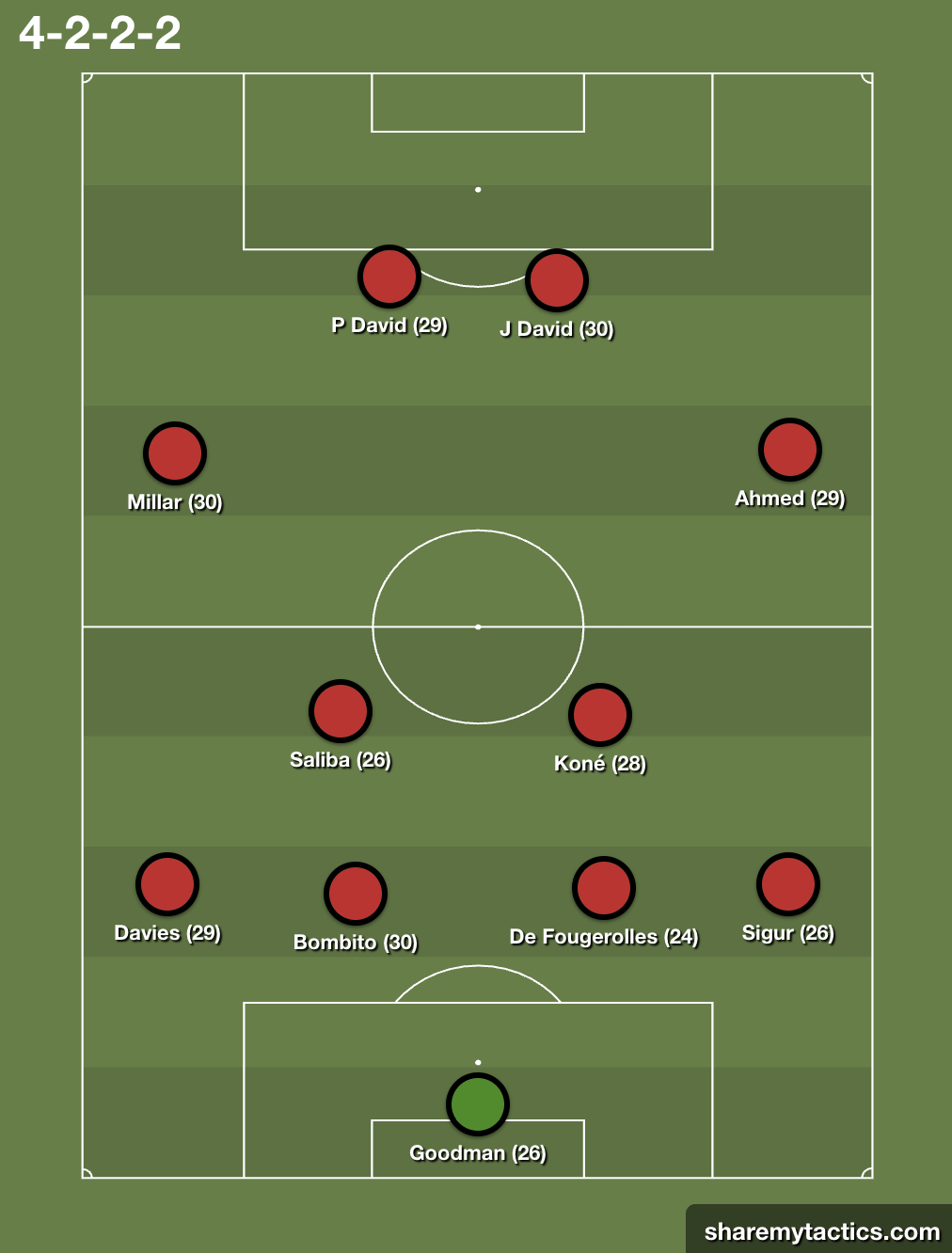
Considering that a lot of these players are already key pieces on this Canadian team right now - on paper, Davies and J. David remain Canada’s two best players (no matter how this World Cup went for David), with Bombito and Koné not far behind them - that’s not bad at all. Otherwise, based on what we saw at this tournament, it looks like De Fougerolles, Saliba, Sigur and P. David will soon be among that top group, while the likes of Ahmed, Millar and Oluwaseyi are already key squad players, showing why it’s expected that most, if not all, of the players who are among that 14-player group should crack that 2030 team, barring something unforeseen.
Because of that, when looking at this list, the only big question marks Canada will have are whether or not Goodman can turn into a starting goalkeeper over the next four years, and the health of Davies and Koné after their major injuries.
Therefore, that’s a nice transition into those who are currently 27 or older on this squad, where there are a lot more question marks, as one would expect.
For those curious, that’s goalkeepers Maxime Crépeau (32) and Dayne St. Clair (29), centre backs Derek Cornelius (28), Alfie Jones (28) and Joel Waterman (30), full backs Alistair Johnston (27) and Richie Laryea (31), midfielders Stephen Eustáquio (29), Mathieu Choinière (27) and Jonathan Osorio (34), winger Tajon Buchanan (27), and striker Cyle Larin (31).
Among that group, there are still some key players - Johnston, Eustáquio and Buchanan are among Canada’s best players on paper, while a lot of the others played big starting roles in this World Cup, such as Crépeau, Cornelius, Laryea and Larin.
Based on their age, Johnston and Buchanan are good bets to return for that 2030 World Cup, while one has to imagine that Eustáquio should still have a big role to play at that tournament. Otherwise, Cornelius, Jones and Choinière should also be able to crack that squad, even if they might be in a fight to start at their respective positions.
The big questions?
In goal, there’s the question of whether Crépeau and St. Clair can battle to earn a starting spot in goal, which might depend on much on Goodman’s development (or the emergence of other young goalkeepers) as well as their performances over the next few years - although it feels like a guarantee that one or both will be in the squad no matter what happens. Then, at full back, it’ll be fascinating to see if Richie Laryea still has a role to play for Canada at the age of 35, given how good he’s been for Canada over the last few years, while at centre back, Joel Waterman will battle to remain in the mix at the age of 34, even if it seems unlikely he does that after he didn’t make a single World Cup appearances across 2022 and 2026 despite being in both squads.
In midfield, it’d be a huge shock to see Jonathan Osorio return at 38, so there’s not much of a big question there, which leaves up front - could a 35-year-old Cyle Larin still be in the mix up front with Canada’s forward options, especially when considering the players who didn’t make this squad such as Jacen Russell-Rowe, Daniel Jebbison and Aribim Pepple, to name a few?
That should be all quite interesting to follow, as it’s always quite hard to project how some of these older players might age - many didn’t have Crépeau becoming Canada’s starting goalkeeper for this 2026 World Cup, for example, after he missed out on the 2022 World Cup due to a serious leg injury. 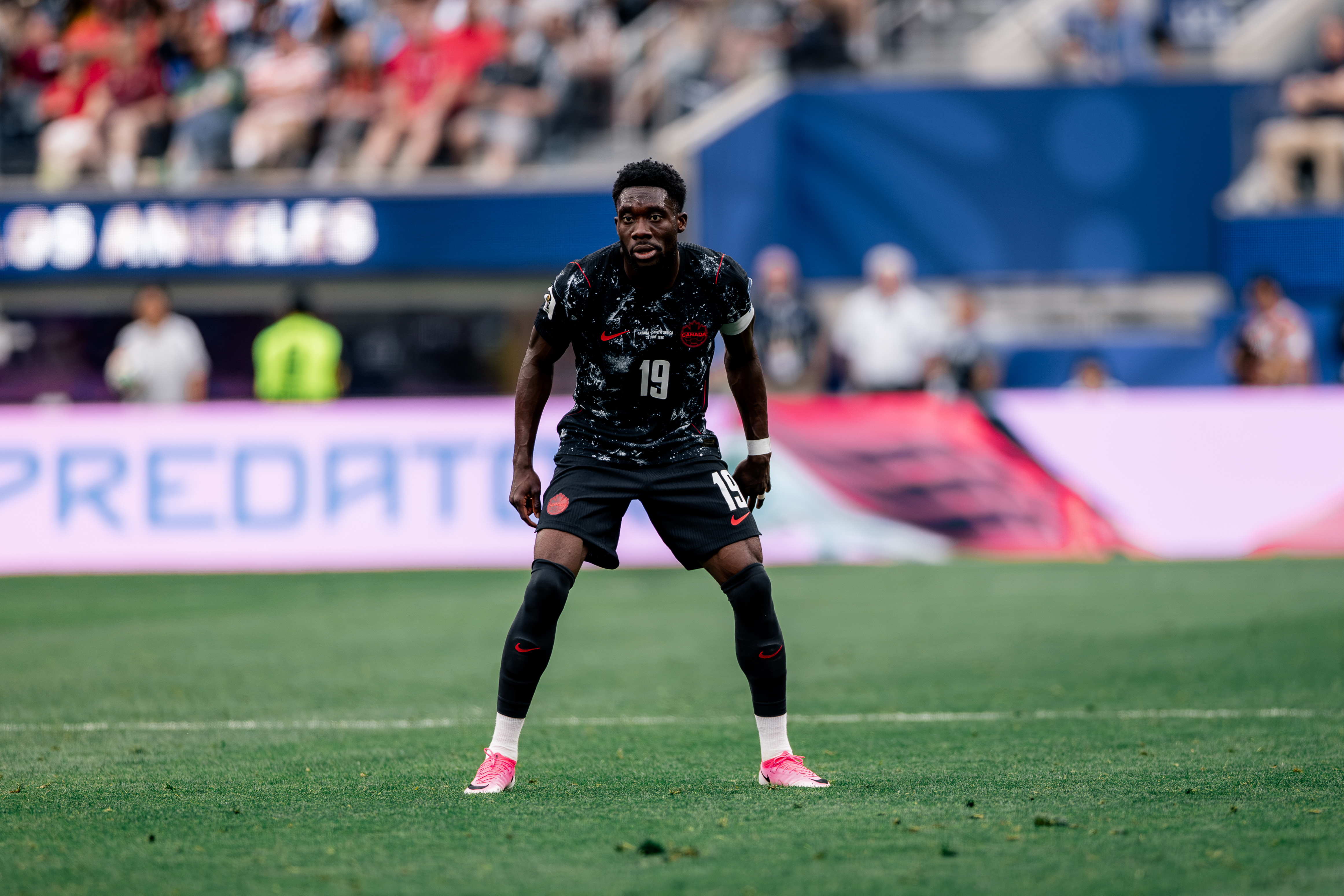
Could we see a shift in Canada's identity?
One other thing to watch as Canada's squad begins to change? Whether or not that changes how this team looks on the field in 2030, from a tactical perspective.
With Marsch expected to stay in charge throughout this World Cup cycle, there won't be big changes to how this Canadian team plays - since his arrival, Marsch has made it clear that he wants this Canadian team to play a certain way, which sees them press high, impose themselves on matches physically, and play directly.
Nor should that change, either. After the 2022 World Cup, this team needed to shift their identity (since they didn't really have one at the time), and Marsch's arrival has allowed them to do that, as he's brought a clear model of play that fits in with the makeup of this squad.
At the same time, that's not to say that Canada can't be flexible with that identity, either. For example, for a team that has struggled to score for large periods of Marsch's tenure, could we see this team tweak their offensive set-up, employing a new formation that allows them to still press but changes the way they look on the ball?
RELATED: What did the CanMNT learn from their 2026 World Cup performances?
With the integration of new players into this squad, Marsch's hand might also get forced in that regard, as he'll likely have to adjust his set-up to the profile of those players and how they fit in with those around them.
And those changes could then have a ripple effect on the rest of the squad. For example, if Marsch switches from a 4-2-2-2 to a 4-2-3-1 with a true attacking midfielder, that will all of a sudden create a world where Canadian attacking midfielders have a much better route into this team.
Imagine if there was a dual-national attacking midfielder out there on the fence about committing to Canada who decided to give them a shot because of that? That would completely change the make-up of this squad for 2026.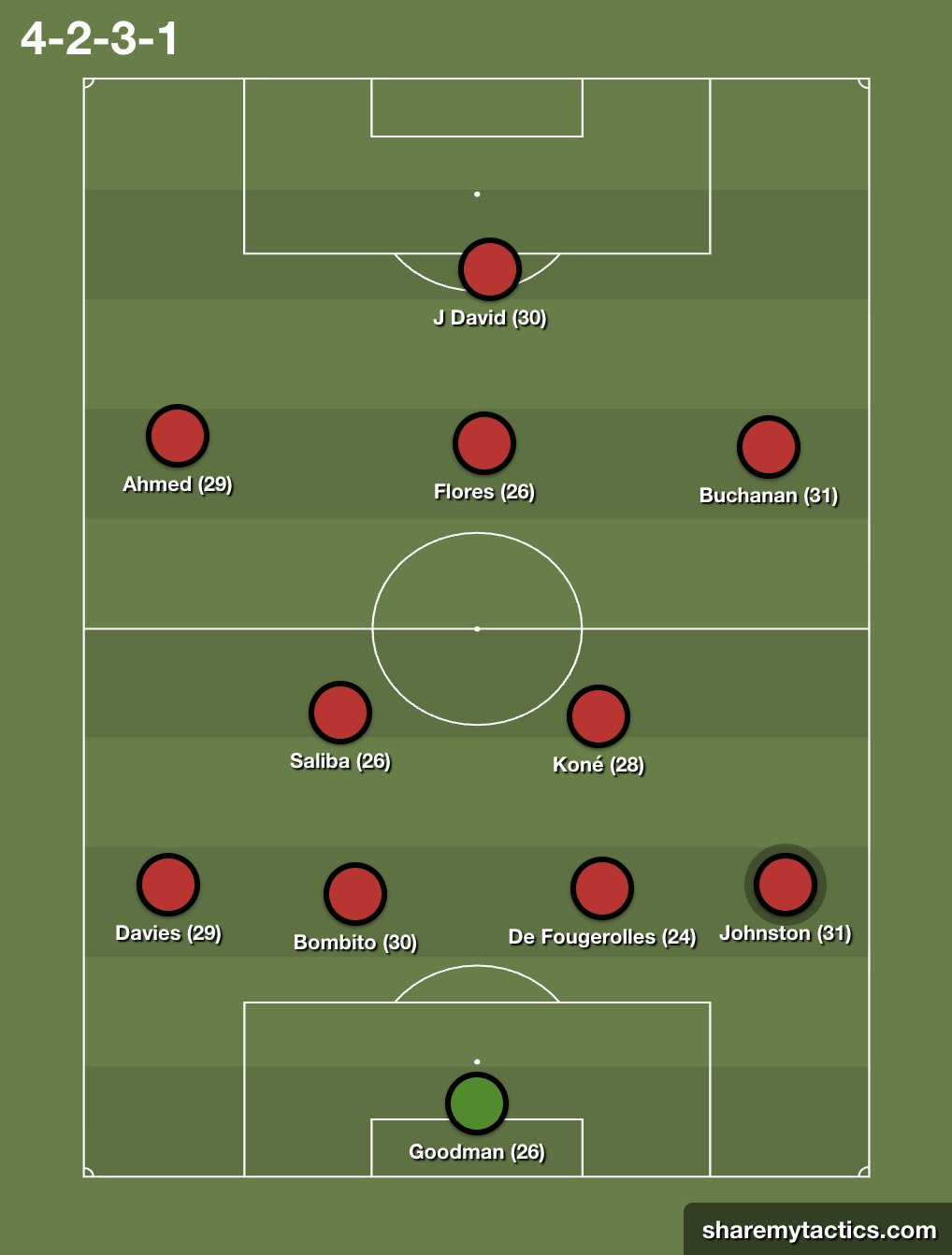
With Marcelo Flores's ability to play as a #10, could we see Canada employ something like this in four years time? One can only wonder.
Because of that, it's imperative that Canada adjusts their tactical profile based on what they learned this World Cup as well as for this next generation of players that comes into their ranks, as that'll play a big role in their progression as a side.
Ultimately, while it's good that Canada now has a clear identity, as most top teams all have a clear way of playing, the reality is that those same top teams are also always tweaking their tactics based on their current crop of players, and Canada must make sure that they do that. 
What's next?
Yet, to conclude this piece, that’s one big thing to watch in the months to come, and that’s the progression of the next generation of Canadian players, which will also play a big role in determining what this side looks like in four years.
As seen above, some pretty good young players who are already on this Canadian side will be ready to step into bigger roles, while someone like Marcelo Flores should be a good bet to join them after the 22-year-old unfortunately missed out on this tournament due to a major knee injury.
Then, among some of the other young players who have been on the periphery of this Canadian team over the last few months, Russell-Rowe, Jebbison, Pepple, Ralph Priso, Jahkeele Marshall-Rutty, Jamie Knight-Lebel and Jeevan Badwal will also look to push to join this group in the short-term.
And then, there’s the list of players who we aren’t even talking about, who could emerge in the longer-term.
Who can be the 2030 team’s Bombito, a late bloomer who comes in and gives Canada a big boost at a position of need? Who can be their Sigur, a promising dual national who commits to the program in the next cycle and immediately makes himself a difference-maker? The next Saliba, who bursts onto the scene after being developed within Canada and shows that he’s ready to be a starter? The next De Fougerolles, who isn’t even 18 yet as this cycle begins but will soon be ready to break out at a higher level?
Then, once they find those players, they’ll have to integrate them into the team, ensuring that they get the opportunity to become key contributors for this team the way the likes of Bombito, Sigur, Saliba and De Fougerolles did?
Yet, this all shows what’s now ahead for Marsch and his staff.
If he doesn’t change much, this Canadian team will still be in a good position heading into this 2030 cycle, but if this side wants to take another step forward over the next four years, they must find a way to keep pushing and to further develop the level and depth of this team, which is where integrating more young players will be key.
Canada benefited from that this cycle, as they were a younger team in 2026 than they were in 2022 - can they do the same now in 2030, while winning a trophy or two along the way? It’ll be fascinating to see.
Here's a look at what's ahead for Concacaf teams in the 2030 World Cup cycle.